


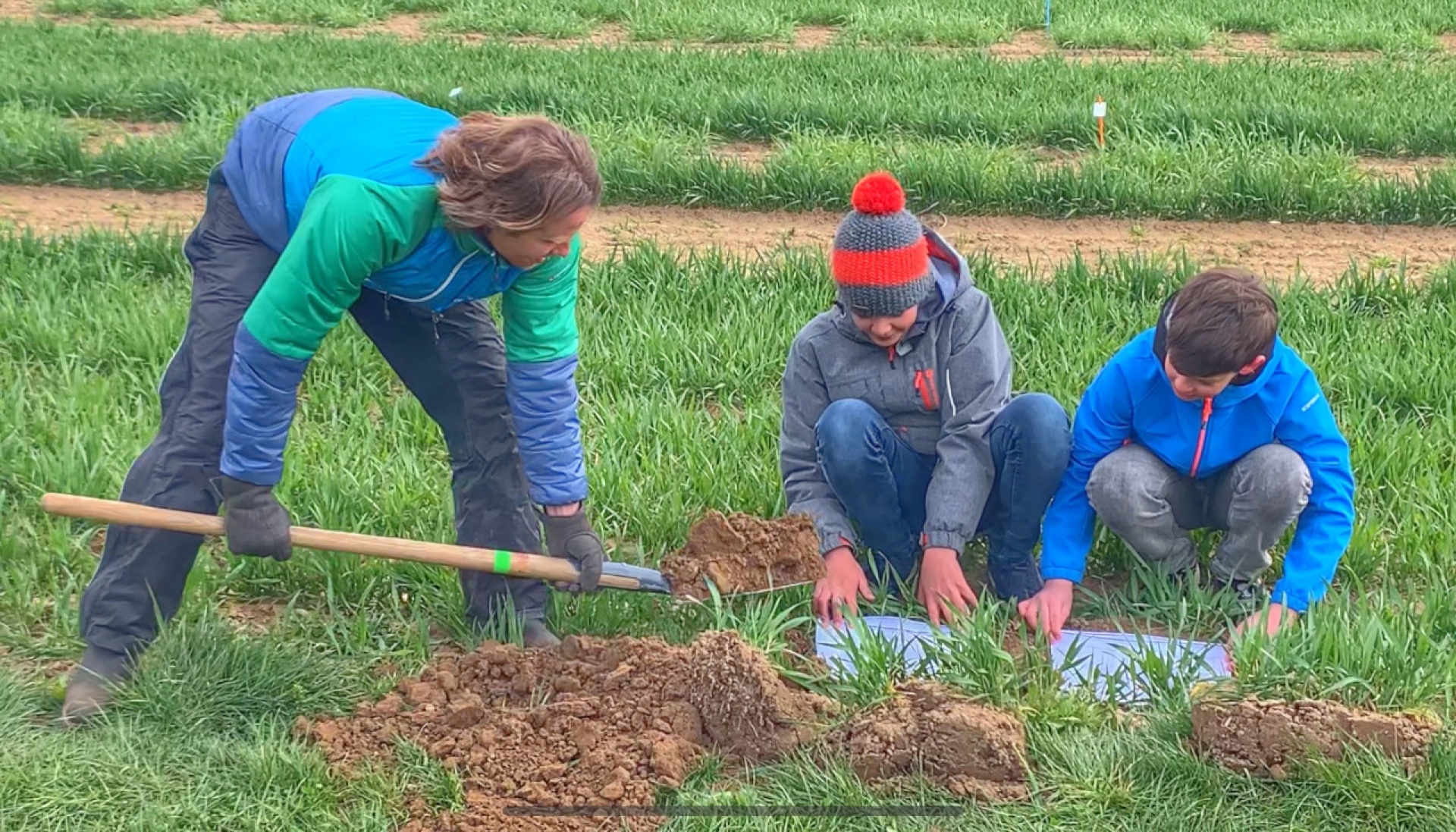
Soil Test 1: Soil Texture by Feel
Purpose: to estimate soil texture (sand, silt, clay proportions) by hand, which influences many soil properties (water retention, nutrient supply, workability) and to get in first contact with the soil.
Material needs: Digging spade, water (best in a spray bottle), tarp / bin bag /tray
Time estimated: 10 minutes
Step-by-step instruction:
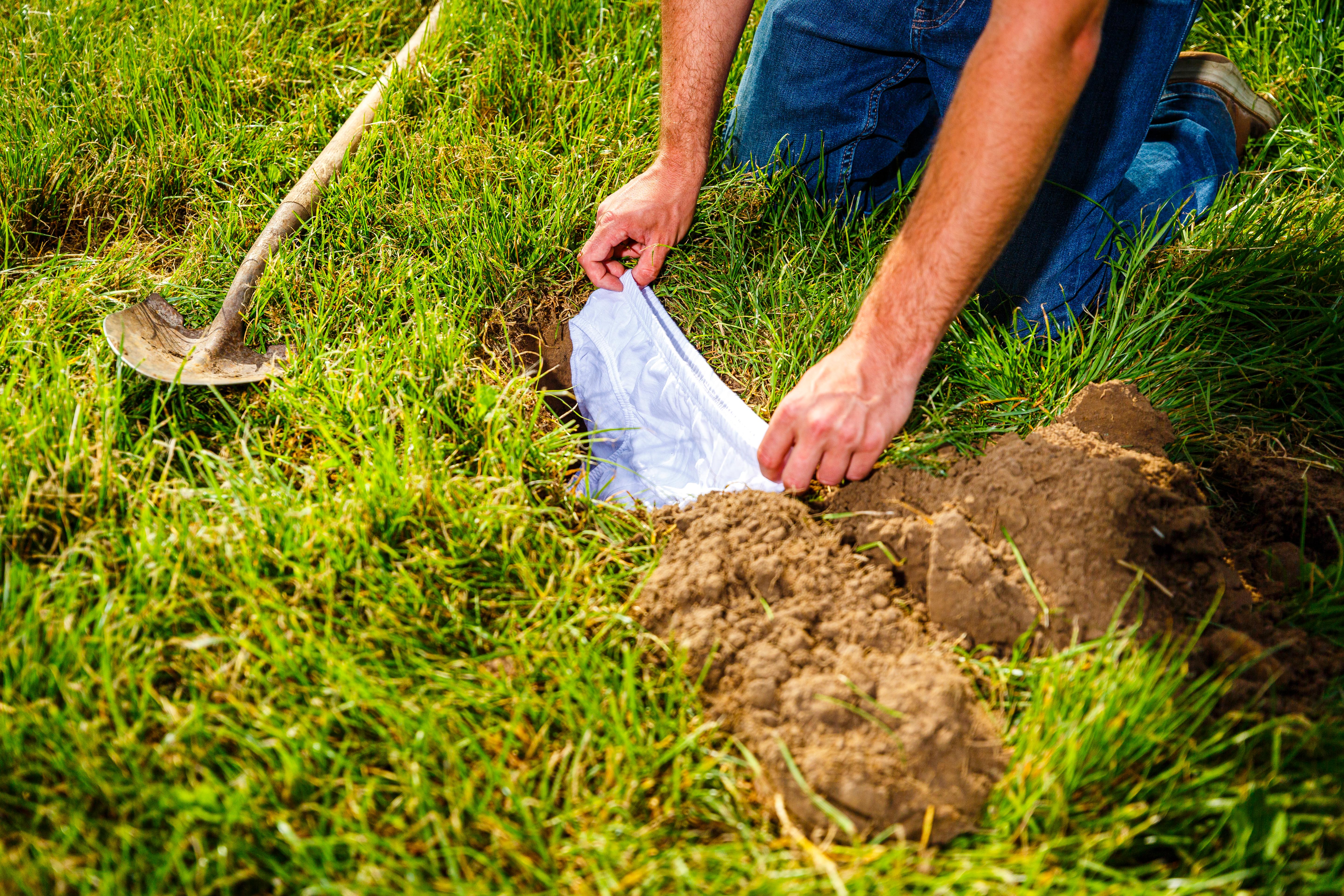
- Dig a hole of approximately one spade blade’s depth and 20 cm on each side. It should be slightly wider than the spade. Try to keep one side of the hole as intact as possible to use it for the VESS spade test (Soil test 2). Place the excavated soil on a tarp or in a box for performing Earthworm counts (Soil Test 3).
- Take a representative mix of the excavated soil (use a mix of soil from approximately 5- 20 cm depth, avoid the top layer with plant material, if present).
- Perform the soil texture analysis as described in the diagram below.
Info: “Gritty” feels like (parts) of sandpaper/ can feel individual kernels,
“smooth” feels like wet flour or baby-powder.
Video tutorial: https://www.youtube.com/watch?v=W0osjN0t-Ho (To open the video, do not click on the link, but copy and paste it into your browser)
Link to Flowchart:
https://www.nrcs.usda.gov/sites/default/files/2022-11/texture-by-feel.pdf
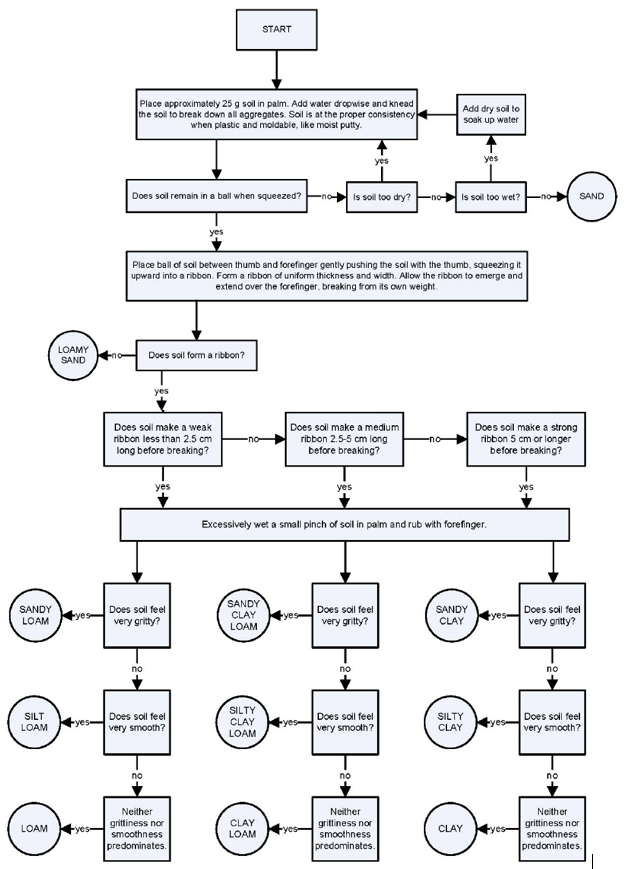 Figure 1 Soil texture by feel instruction. https://www.nrcs.usda.gov/sites/default/files/2022-11/texture-by-feel.pdf
- References
Thien, S. J. (1979). A flow diagram for teaching texture by feel analysis. Journal of Agronomic Education, 8(1), 54–55. Modified and reproduced in USDA Soil Texture by Feel. Retrieved from https://www.nrcs.usda.gov/sites/default/files/2022-11/texture-by-feel.pdf
PDF Version:

App herunterladen und registrieren



Standort beschreiben


Falls du kein Smartphone besitzt oder aus anderen Gründen lieber mit einem PC teilnimmst, navigiere zur Karte.
Wie hat es denn beim Kabarettisten Simon Enzler funktioniert?