


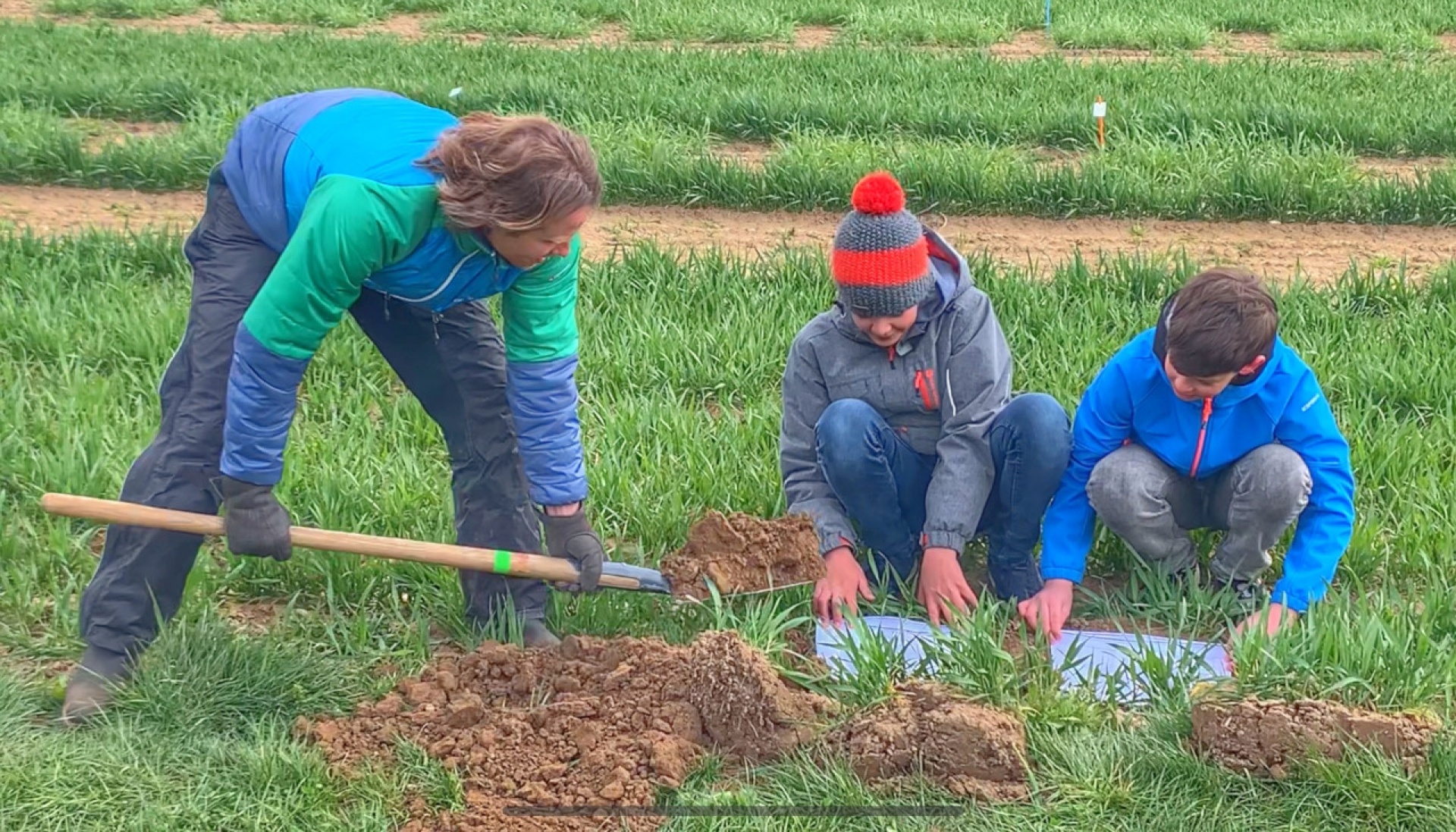
Soil Test 8: Soil your Undies
Purpose: to give a visual and engaging measure of soil biological activity and organic matter decomposition.
Material needs: Underpants (Coop Naturaline Herren Slip weiss S), spade, something to mark location, phone to photograph
Time estimated: 10 minutes
Step-by-step instruction:
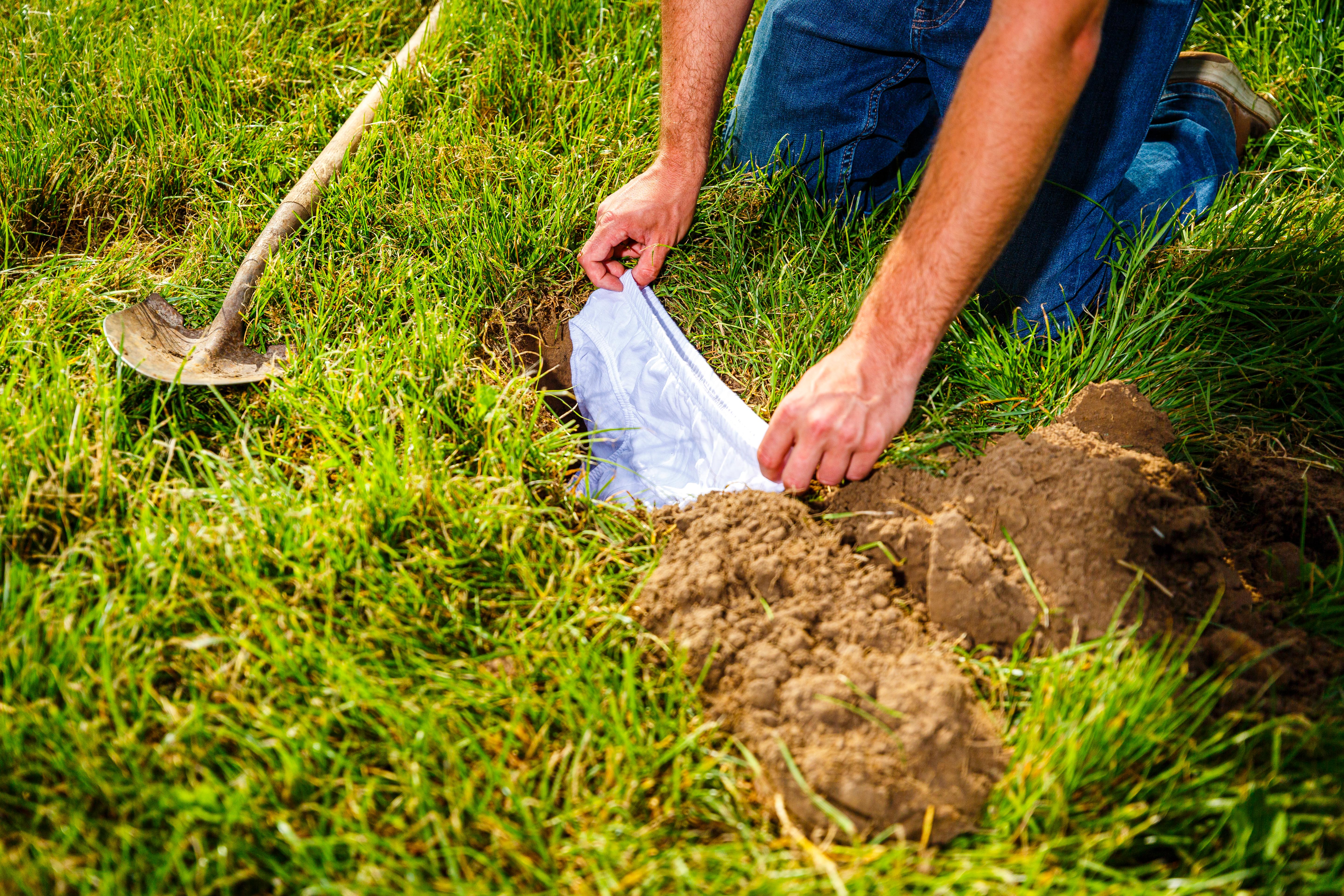
- Remove the top soil layer with vegetation and put aside. Dig a hole of approximately 30cm depth and 50cm width, so that the underpants can be inserted vertically into the soil without folding the textile.
- Attach the underwear horizontally to the edge of a hole, with the waistband protruding just above the soil surface.
- If necessary, secure the waistband with a stone or your foot.
- Refill the hole with
Purpose: to give a visual and engaging measure of soil biological activity and organic matter decomposition.
Material needs: Underpants (Coop Naturaline Herren Slip weiss S), spade, something to mark location, phone to photograph
Time estimated: 10 minutes
Step-by-step instruction:
- Remove the top soil layer with vegetation and put aside. Dig a hole of approximately 30cm depth and 50cm width, so that the underpants can be inserted vertically into the soil without folding the textile.
- Attach the underwear horizontally to the edge of a hole, with the waistband protruding just above the soil surface.
- If necessary, secure the waistband with a stone or your foot.
- Refill the hole with soil in the same order as it was dug, start with the lower soil layer first, then place the upper soil layer on top.
- Replace the vegetated layer (if present) on top.
- Press everything down firmly so that the white waistband is still visible.
- Place the marker next to the underwear.
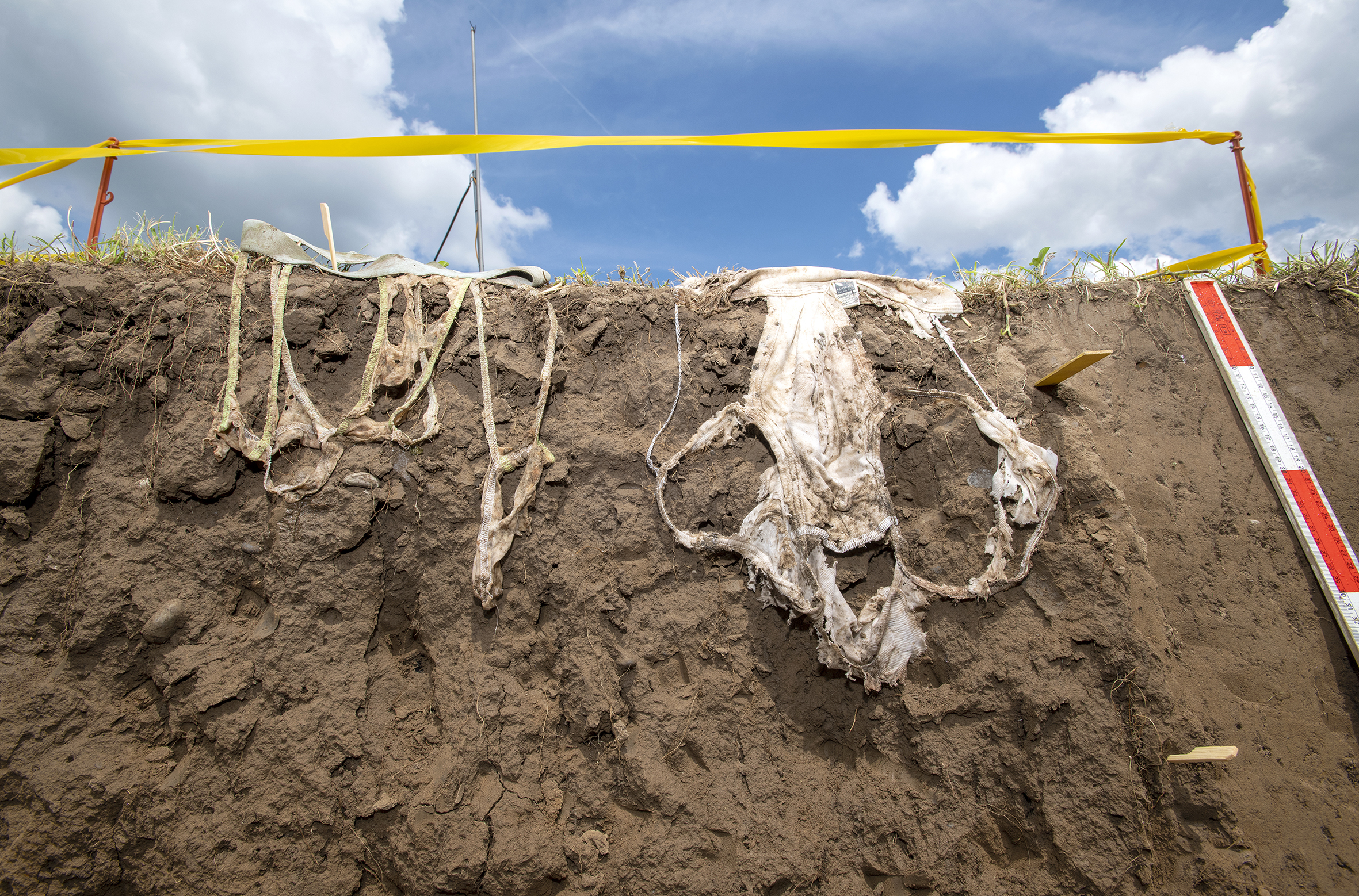
- After 8 weeks, carefully dig up the underwear again.
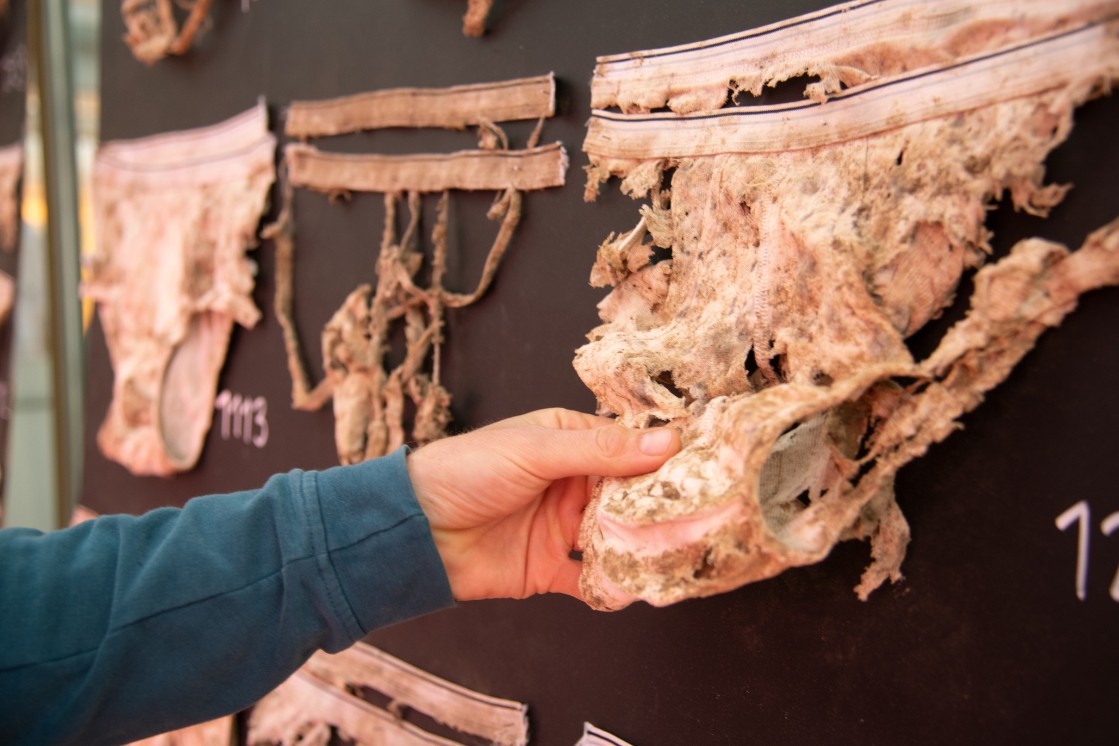
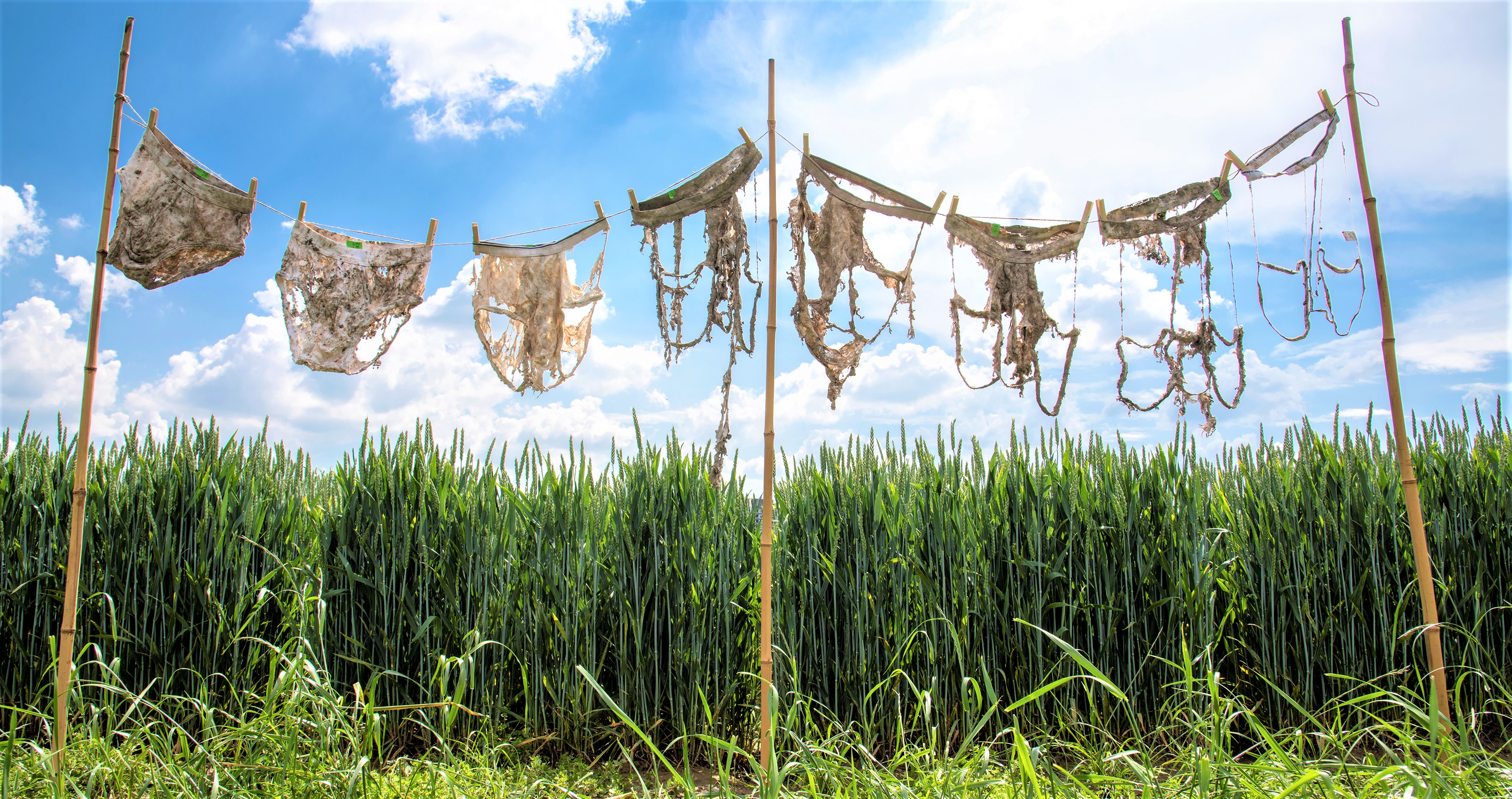
- Compare the degree of decomposition with the reference scale.
Video tutorial: https://www.youtube.com/watch?v=Wk_L34ufHg4; https://www.youtube.com/watch?v=5W1wE7obF10 (To open the video, do not click on the link, but copy and paste it into your browser)
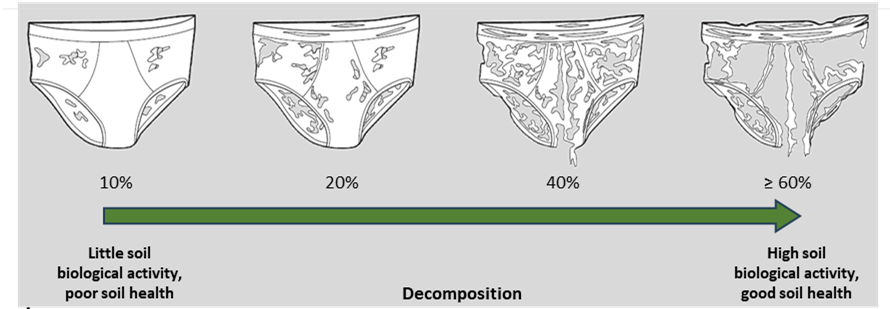
Figure 3 Degradation degree of soil underpants.
Form
- Time buried before excavation: _______
- Was the area watered?: Yes / No
- Degradation degree: 10% / 20% / 40% / 60%+ / don’t know / gone
- References
Beweisstück Unterhose. (2025, August). Anleitung 2024 [PDF]. Retrieved from https://www.beweisstueck-unterhose.ch/images/content/Aktion2024/2024_BSUH_Anleitung_A4_De_3-kombiniert.pdf

App herunterladen und registrieren



Standort beschreiben


Falls du kein Smartphone besitzt oder aus anderen Gründen lieber mit einem PC teilnimmst, navigiere zur Karte.
Wie hat es denn beim Kabarettisten Simon Enzler funktioniert?